The Metadyne Website
The site created by Mike Horne (1953-2020), writer and researcher

About this site and its author...
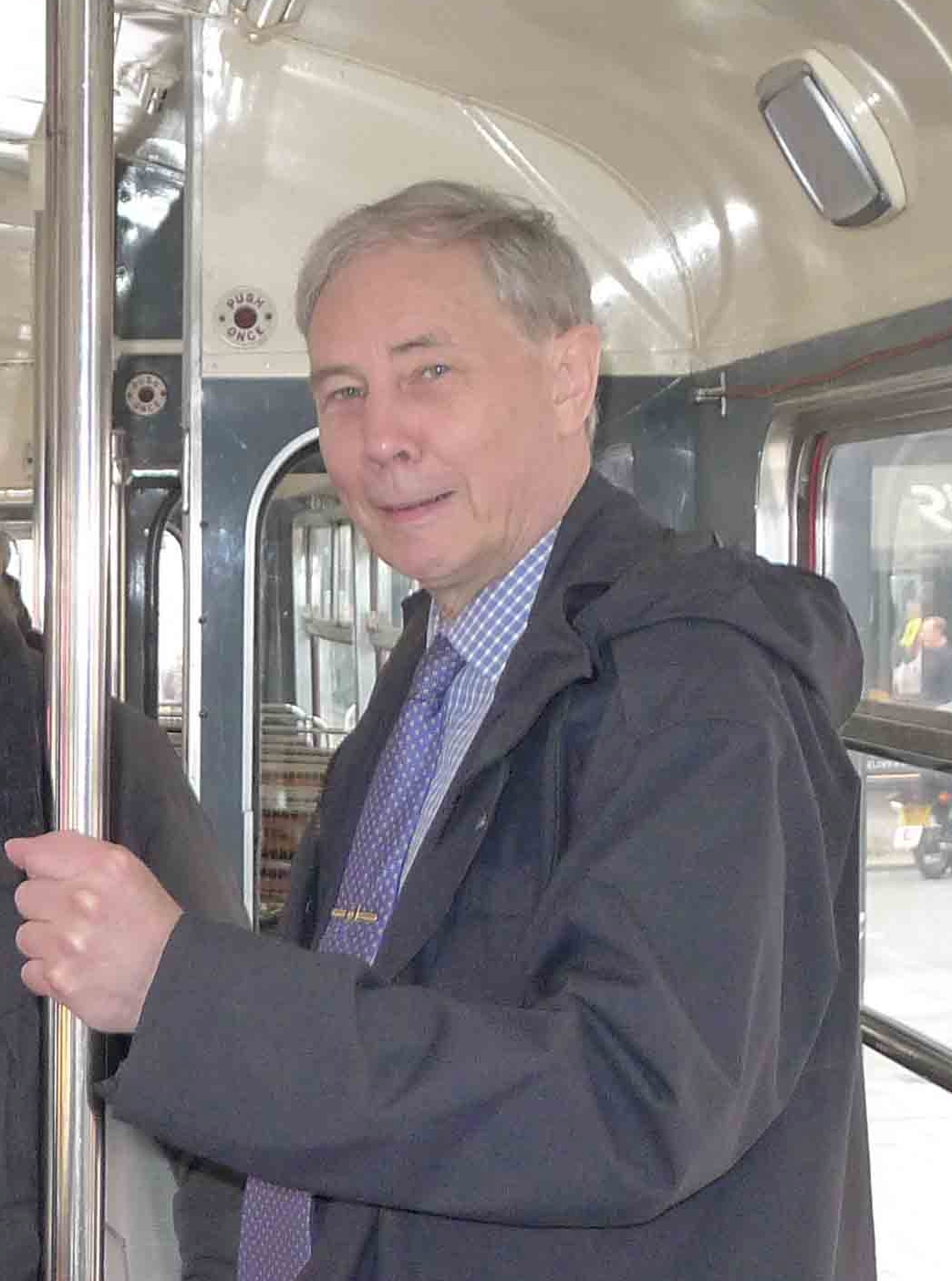
[Photograph of Mike Horne © Nick Agnew]
This is the website created by Mike Horne, writer and researcher, who died in March 2020. Mike’s research interests were broad covering inter alia the London underground, telecommunications, London, police history and civil parish boundary markers.
The site hosts a number of research articles prepared by Mike that haven’t appeared in formal print. You will also find some articles or books that were started by Mike but remain incomplete; please take these 'as is'. Mike also used his blog as a vehicle to write on a wide variety of subjects.
Published by Capital Transport in 2018 and 2019 is Mike’s seminal two volume history of the Metropolitan District Railway: London’s District Railway (ISBN 978-1-85414-425-6 and 978-1-85414-430-0) which was awarded “Transport History Book of the Year” status by the Railway & Canal Historical Society. This site hosts further papers by Mike on the Metropolitan District Railway and some additions and corrections to these volumes and others which have come to light since publication.
You are welcome to view the documents and provided you acknowledge the source you may use the information in accordance with normal copyright conditions. The documents themselves may not be printed or downloaded.
What’s the photo above?
It is the roof of the new part of King's Cross station.
Related resources?
Mike created an extensive series of posts and articles on his blog. It can be found here: Mike Horne Blog; this will open a new web page, or at least a new tab. Items currently topical, as well as the archive, are listed on the ‘other stuff’ pages.
Many files are in pdf format...
So you will need a pdf reader. If you do not have a pdf reader on your computer, you will need Acrobat (or another PDF) Reader in order to view them. You can download a free reader from Adobe. If you are attempting to access the pdf files in a chromium based browser please install the appropriate extension for your browser - eg search for "acrobat edge extension" or "acrobat chrome extension". The PDFs will not load correctly unless you are using the appropriate extension. When reading the files use Page Up and Page Down for navigation.
Contact the Webmaster
If you have any queries about this site, or any observations about its contents, or can help with any information, then I will be pleased to hear from you. Owing to software changes at the host site the former contact form no longer works. Please e-mail ‘metadyne @ btinternet . com’ (without the spaces) and I will endeavour to respond in due course.
Why Metadyne?
The metadyne is an intriguing type of electrical machine, akin to a rotating amplifier, and is particularly suited to heavy duty operation where constant voltage input needs to be converted into a constant current (but adjustable) output. The contrived name comes from the greek 'dynamis', meaning power. The machine had was found to be useful for certain types of drive mechanism, including gun turrets and cranes, and to a lesser extent, traction; under this name it was developed in the 1930s and 40s by Metropolitan Vickers and was a development of the earlier Amplidyne machine developed in America.
Whilst there are all kinds of stories that could be offered as to why it is relevant to this site, Mike was actually after a fairly ambiguous name and just liked it!
Search this site
| search engine by freefind (includes adverts) | advanced |
Alternative navigation links.
Alternative link to Research Work
Alternative link to Rail Index
Alternative link to Other Stuff
Alternative link to Mike's Blog
Updated 30 December 2024
© 2020 Mike Horne Estate
Template designby Andreas Viklund