This is the Metadyne Website
London’s Airports and their Transport Links
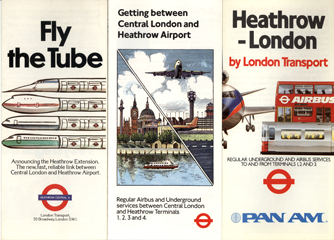
Heathrow and Transport Access
Before the Second World War London was served by a number of small aerodromes. A few of these were elevated to the status of ‘airport’ (meaning they had the ‘port’ facilities necessary for international traffic) and the best known were Croydon and Heston. After the Second World War, the heavier aircraft needed much larger facilities which could not really be accommodated at the former locations. It came to pass that entirely new airports were developed at Heathrow and Gatwick.
Neither airport was particularly close to central London. Gatwick was within reach by rail where a station was provided, linked straight into the airport. At Heathrow the main terminals were in central London and passengers were conveyed to and from the airport by special coach (or, briefly, by helicopter). Although terminal facilities were transferred to the airport itself in the 1960s and 70s these coaches lasted until the Piccadilly Line was extended in 1977.
It might be thought that proper, high volume and high quality transport links should have been provided to Heathrow from the start, in 1946 and, indeed, this was considered. Much of this article explains the long tail of why this was not done and why the Underground was so slow in getting there.
Download Article
To download the article, please click the button below. Please give the above download several seconds to arrive as it is a large-ish file. If you experience a problem using the button, there is an alternative link at the bottom of the column.
Links
Click below for links to other sites relevant to the points being made here that might be of interest.
Heathrow Airport History and Information
Alternate link to download article